Extension
Typing Japanese when you speak it conversationally but can’t write kanji fluently means living in a copy-paste loop with a translate tab, like it’s 2009. Hime fixes that where you type. Hit a hotkey in any text field, and your English is replaced inline with natural Japanese, register matched: casual English becomes casual Japanese, business English becomes 敬語.
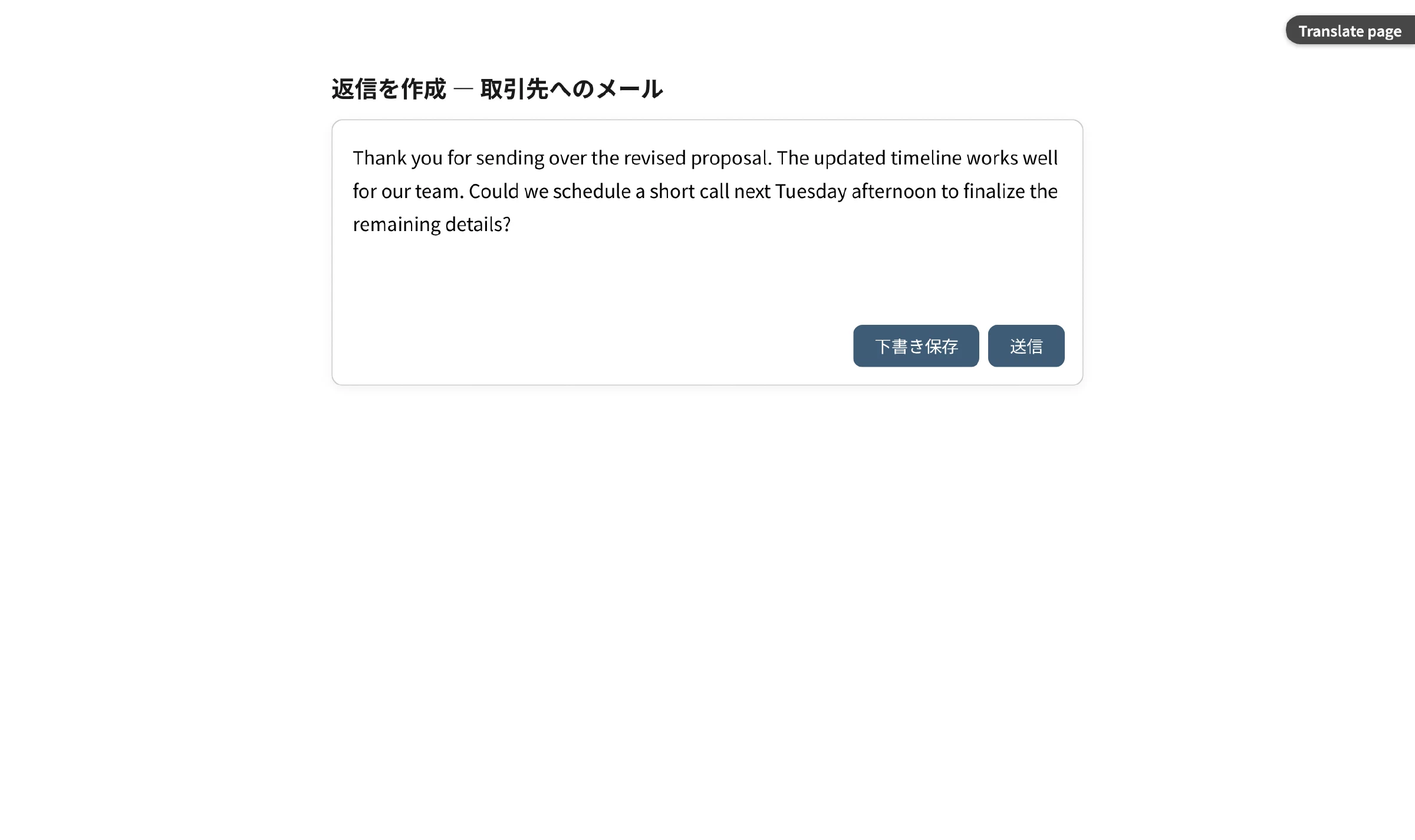
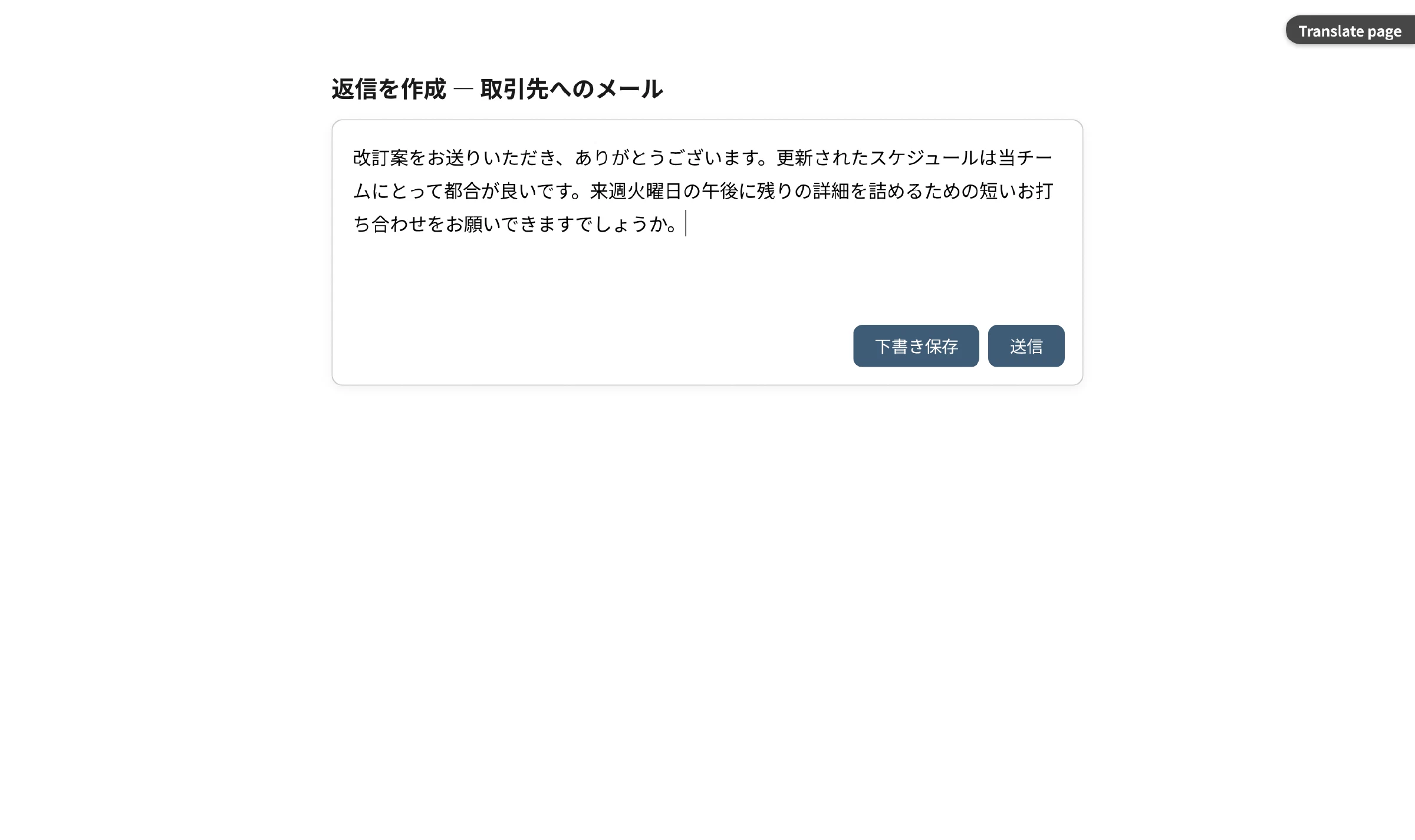
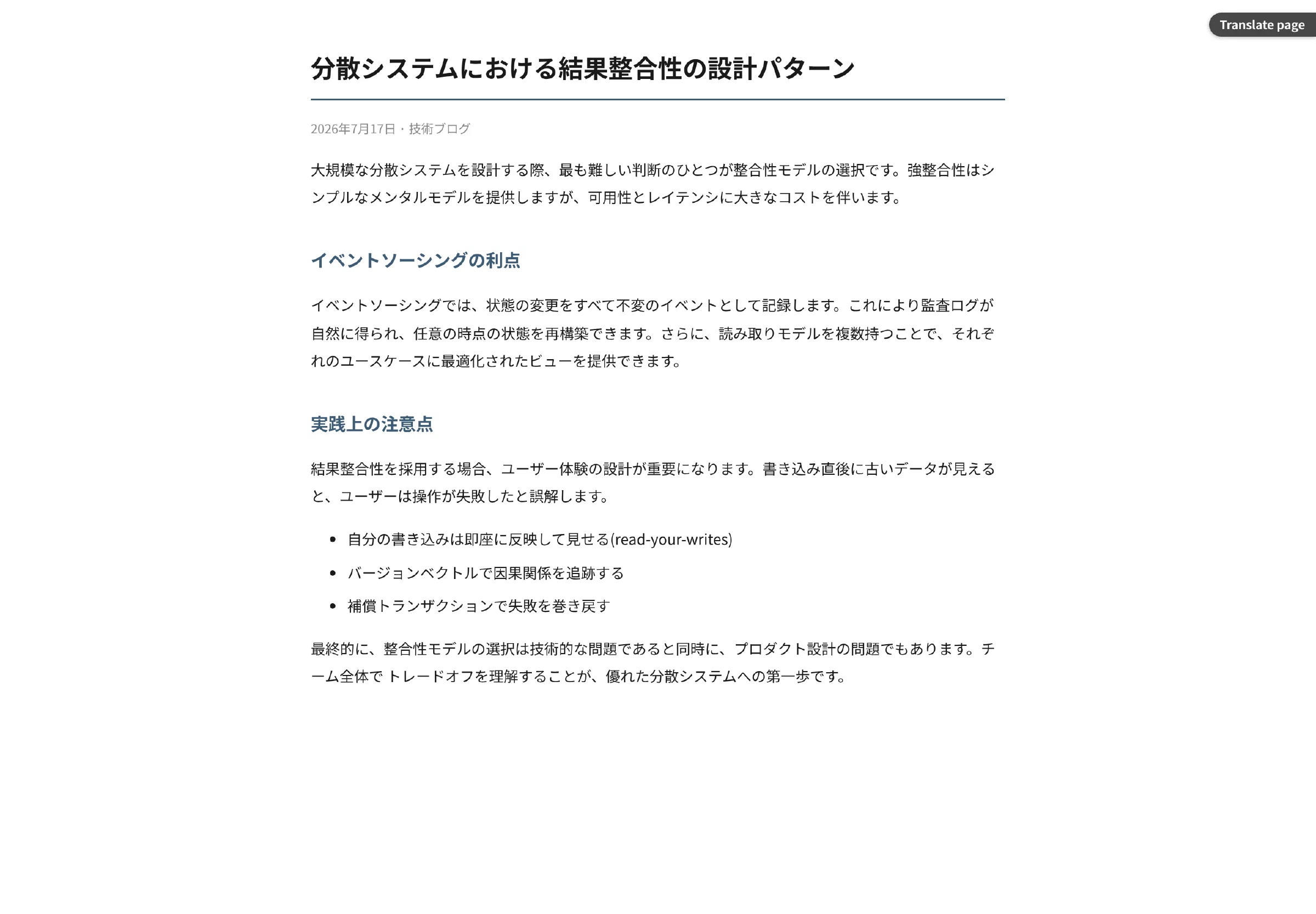
It grew well past the input method. Hime now translates whole pages in place with streaming per-node paint, back-translates search results as they arrive, OCRs and overlays image text, and carries translate intent across a clickthrough so the destination page arrives already translated. All of it bring-your-own-key with zero backend: the service worker owns every network call and keys never touch the page.
Under the hood
Streaming JSON from an LLM into a live page rewrite is a parsing problem in disguise. Hime hand-rolls an incremental extractor that only paints a value once its closing quote is structurally confirmed by backslash-run parity, so multibyte Japanese never tears mid-glyph. The timeout numbers are measured rather than assumed: Chrome’s service-worker kill timer was traced over CDP and the per-attempt deadline locked at 25 seconds, with primary-to-backup model failover that only re-sends failed batches.
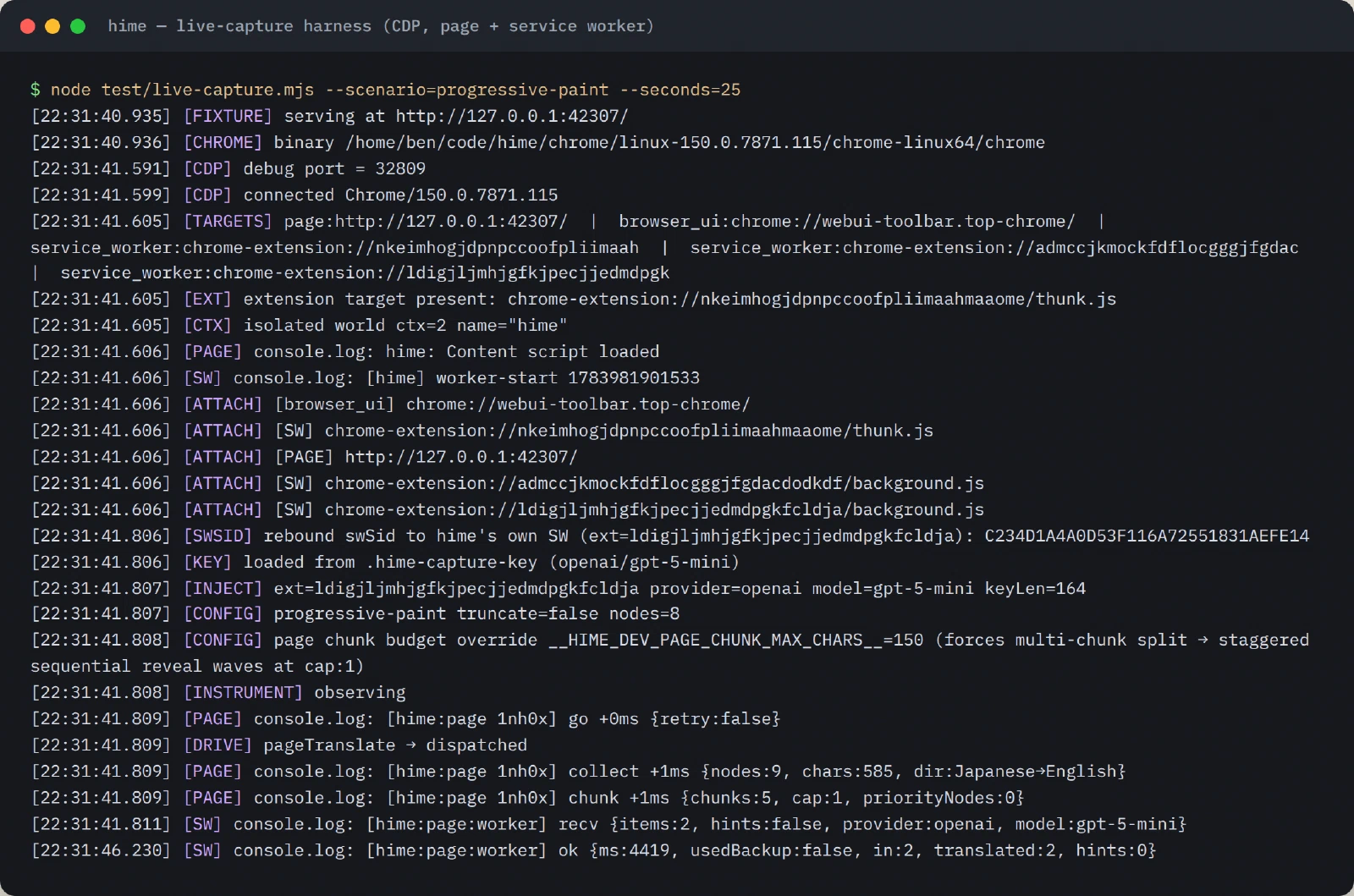
Testing this honestly required a live harness: a zero-dependency Node script that launches headless Chrome, attaches the DevTools Protocol to both the page and the extension service worker, injects config into the extension’s own storage, and streams every console line from both worlds into one log. It caught two production defects that all 389 unit tests at the time missed.
Work quantified
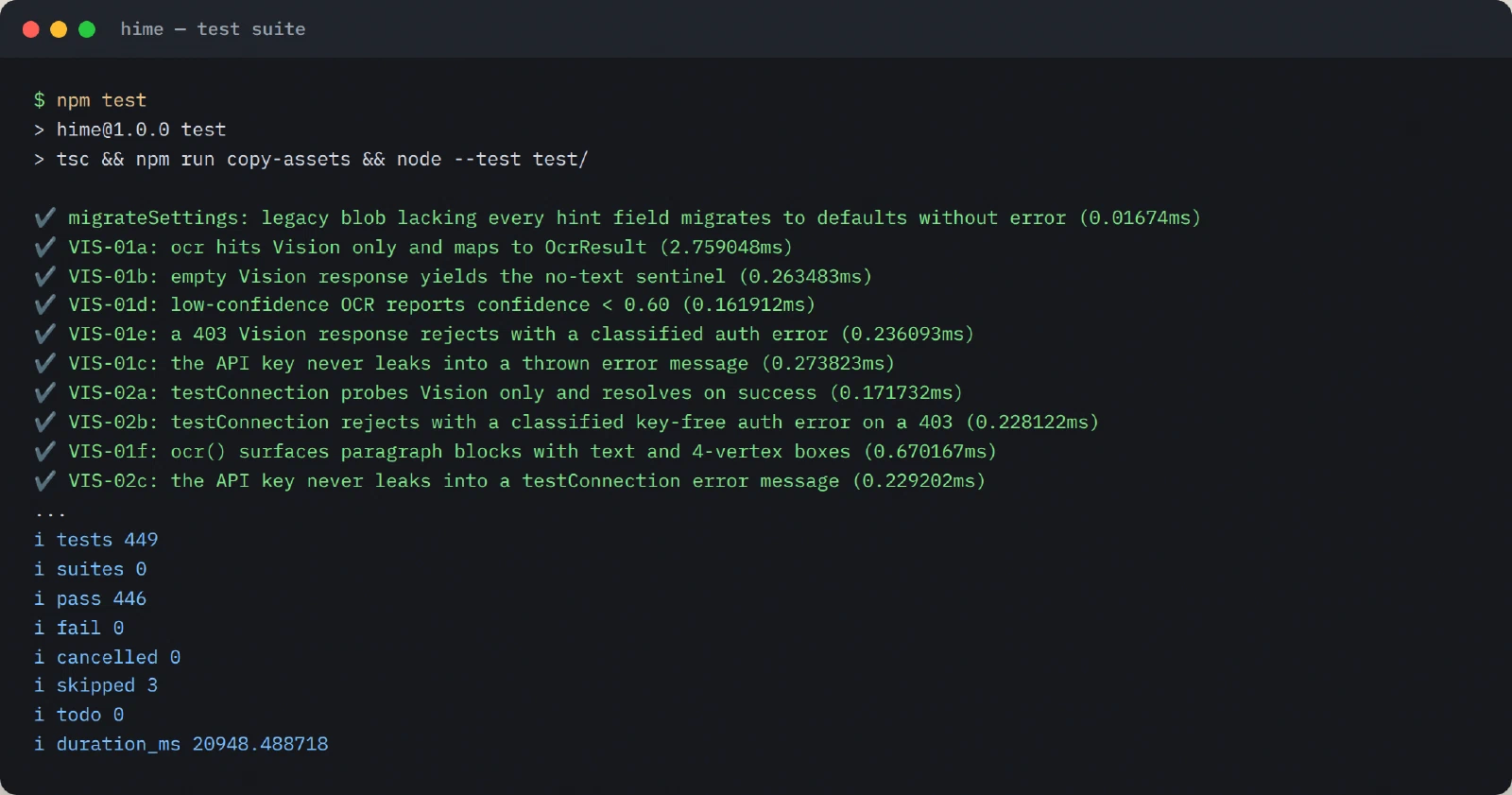
Eight shipped milestones, 30 phases, 449 tests in about 20 seconds, zero runtime dependencies.