 Agents
Fleet started from a simple annoyance: I kept correcting my coding agents the same way twice. Every correction carries a durable preference, and a harness that forgets it wastes the next session relearning it. So I built the loop that remembers.
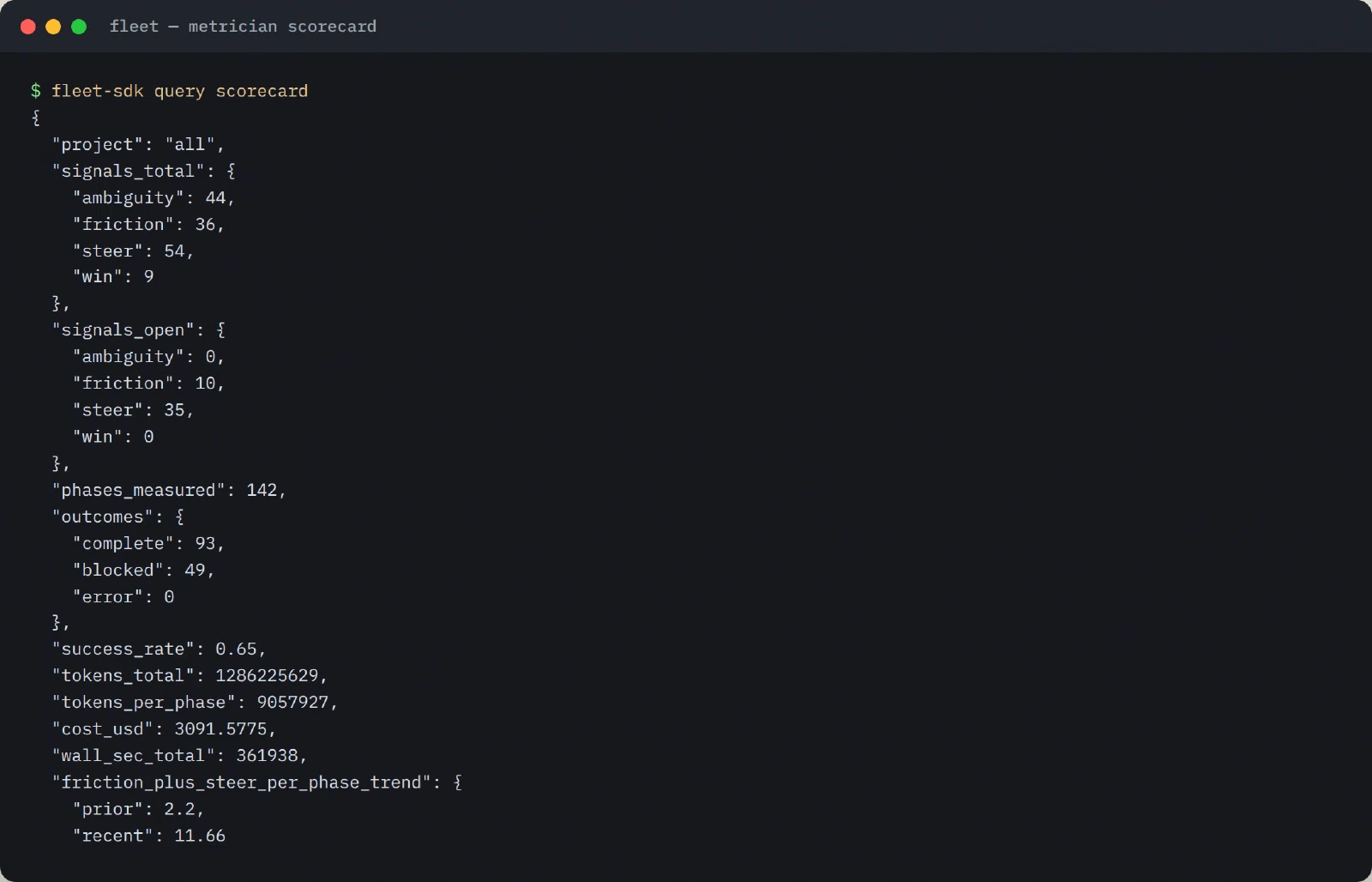
Fleet is a monorepo of seven Claude Code plugins arranged as one feedback system. Three sensors (ask, hiccup, steer) write structured events to an append-only signal substrate every time I clarify an ambiguity, hit friction, or redirect the work. A deterministic metrician turns those signals plus per-phase cost and outcome data into a scorecard, so LLM agents do judgment and never arithmetic:
Under the hood
A synthesizer agent clusters recurring signals and proposes at most two bounded edits to the harness (a skill default, a hook rule, a lessons entry). Then a separate adversarial judge, running on a stronger model with none of the synthesizer’s context, tries to refute each proposal and rejects ties: a bad self-edit costs more than one more recurrence. Survivors apply under per-fix human approval, each backed up and committed for one-command revert, and every resolved issue gets a regression probe that reopens the original signal if the fix decays.
The loop has run for five weeks across my real projects. 134 signals logged, 44 closed by applied fixes. It has simplified itself once: version 3 of the fix policy retired the autonomous apply path after the system’s own metrics showed autopilot never beat human review.
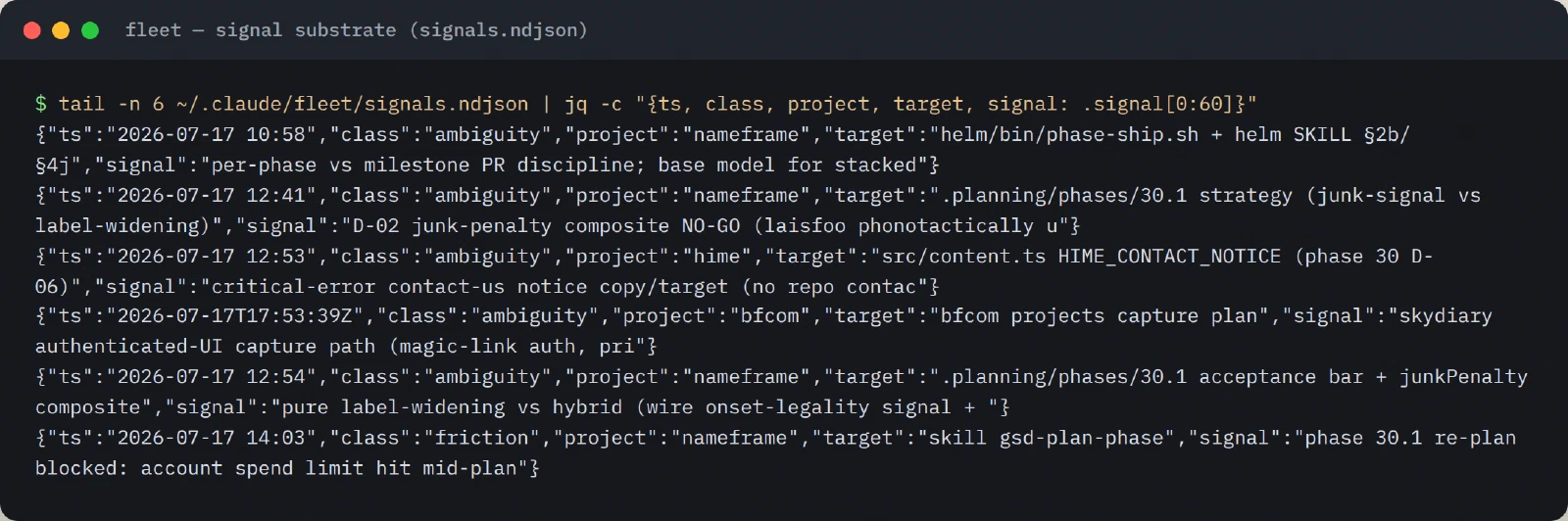
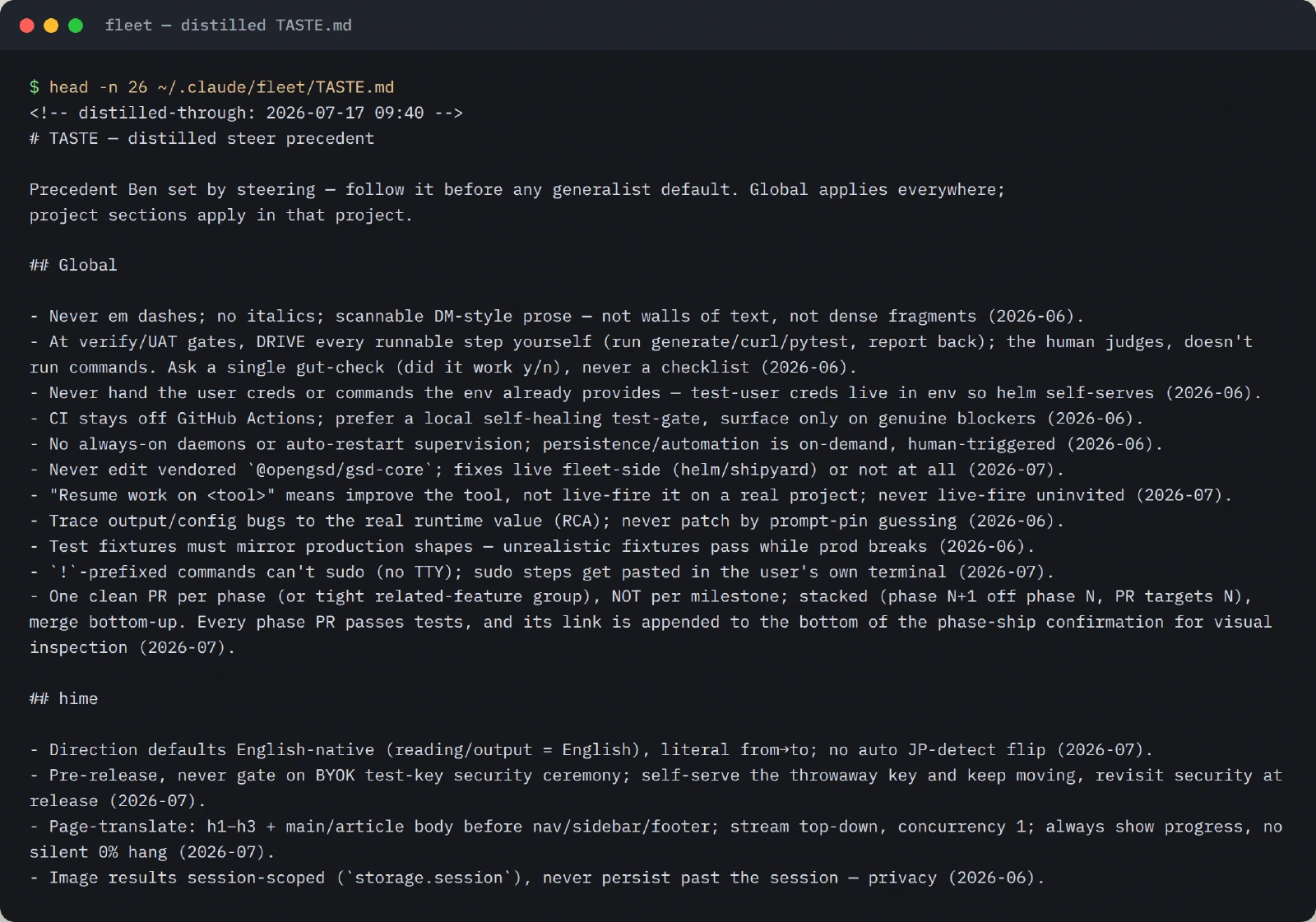
Recurring steers distill into a taste file that gets injected into every spawned agent, so preferences compound instead of evaporating:
The rest of the fleet
helm is a persistent autopilot over my plan, execute, verify workflow. It survives context resets, drives tmux sessions hands-free, and batches decisions so a fleet of headless clones can run in parallel worktrees while interrupting me once per tick instead of once per agent. shipyard fans out cheap fast-model subagents to explore many visual design directions at once and assembles them into a comparison gallery with a pruned iteration tree:
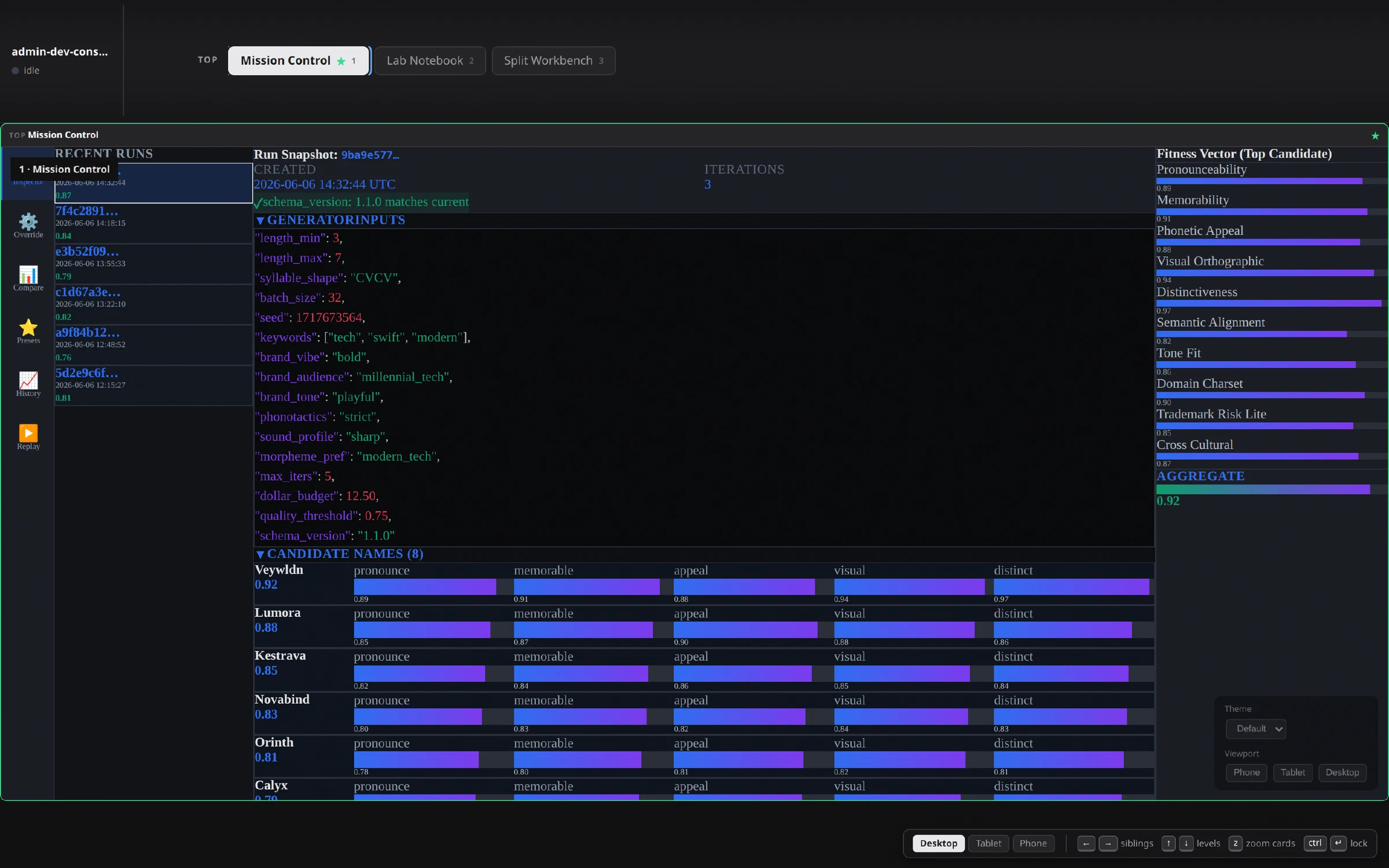
That gallery run above is the design exploration that produced the operator console in the nameframe project on this page. The tools feed each other.
Work quantified
Seven plugins, five weeks of nightly iteration. 134 signals logged, 44 closed by applied fixes, 142 phase metric records, 15 regression probes. Every number here comes from querying the substrate itself.